
Test and tag requirements in WA
What Western Australian law and the Australian Standards actually say about testing and tagging electrical equipment, in plain English, with sources. Last reviewed November 2026.

Is test and tag a legal requirement in WA?
The rule is regulation 150 of the Work Health and Safety (General) Regulations 2022 (WA), made under the Work Health and Safety Act 2020 (WA). WorkSafe WA's code of practice, Managing electrical risks in the workplace, explains that it covers environments such as wet or dusty areas, outdoor work, places with corrosive substances, commercial kitchens and manufacturing.
Offices, shops and classrooms are not under that mandatory rule. The code says testing in lower-risk workplaces is done less often and is guided by AS/NZS 3760. Every business must still keep unsafe electrical equipment out of use and manage electrical risk, and testing to AS/NZS 3760 is the accepted way to show that.
Where testing is required, equipment that is overdue should not be used until it has been tested, so far as is reasonably practicable.
How often does equipment need to be tested?
Retest intervals ESTT recommends
The construction interval comes from AS/NZS 3012, which WA construction sites must follow. The other figures are the intervals we recommend, and in some cases they are more frequent than the minimum. WorkSafe WA's code of practice gives at least every 12 months as its example for high-risk environments in general, at least every 6 months for manufacturing, workshop and commercial cleaning equipment, and every 3 months for hire equipment.
For offices, shops and classrooms the code sets no fixed interval, and AS/NZS 3760 allows longer gaps for equipment that is not moved or flexed. We recommend 12 months because leads, chargers and power boards in these workplaces are moved and knocked about more than people expect.
Equipment should also be tested after any repair or service that could affect its electrical safety, and before first use if it is second-hand. Hire equipment is inspected at the start of each hire.

Who can test and tag in WA?
You do not have to be an electrician to test and tag. The training should cover safe use of the test equipment, electrical risks, AS/NZS 3760 and the legal requirements, and the tester needs to be able to interpret the results. Repairing electrical equipment is different: that is electrical work and needs a licensed person.
What has to be recorded?
This can be recorded on the tag itself. Records must be kept until the equipment is next tested, permanently removed from the workplace or disposed of. A tag should be durable, water-resistant, non-metallic and not able to be reused.
Does new equipment need to be tested?
A new to service tag shows the date the item entered service and when its first test is due. Second-hand equipment is different and should be tested before you first use it.
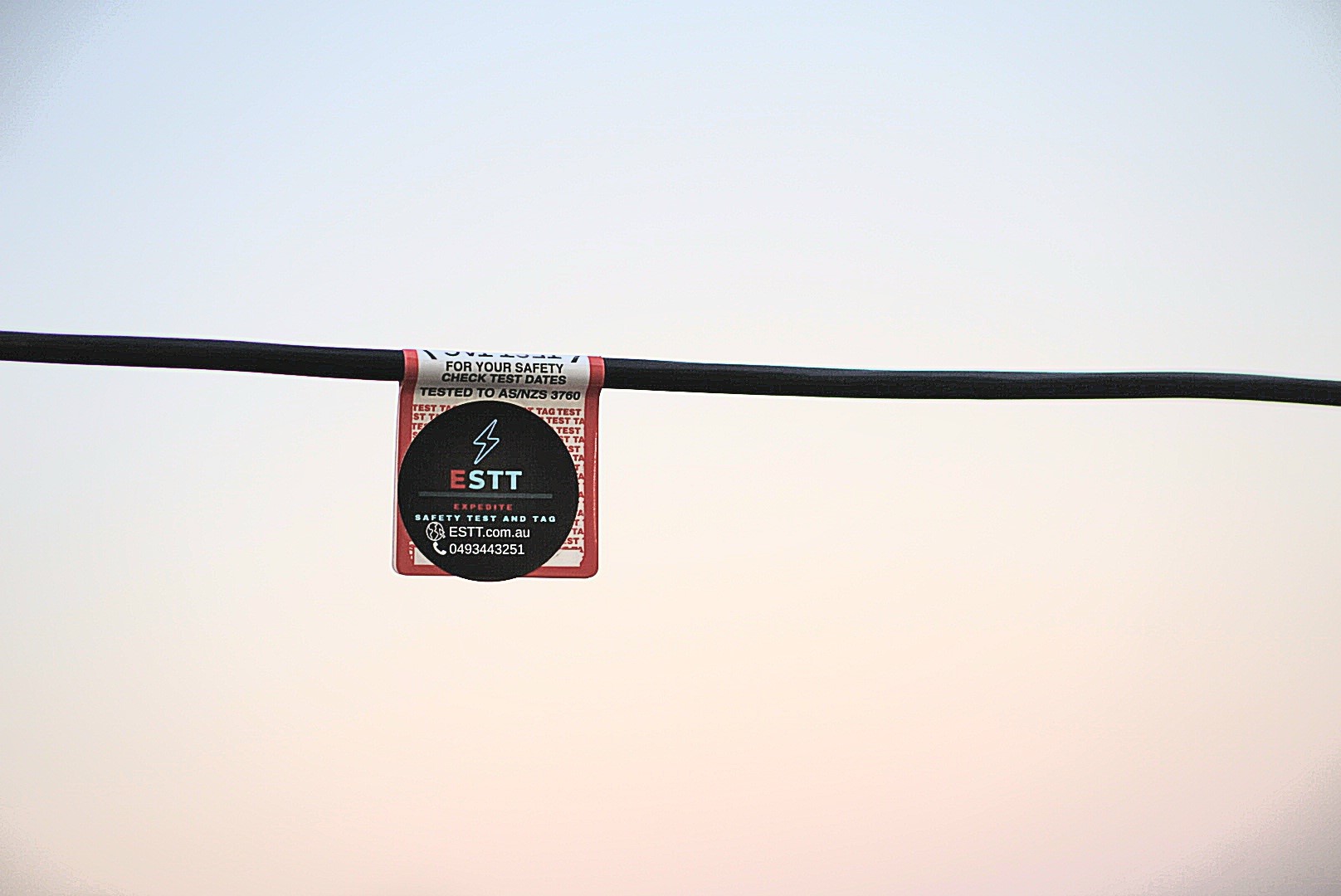
What do the test tag colours mean?
The colour system applies where testing is three-monthly. Other workplaces can colour-code their tags if they find it useful, but they are not required to follow this schedule.
Do safety switches (RCDs) need testing?
This applies to fixed and portable RCDs. A faulty RCD must be taken out of service and replaced as soon as possible. AS/NZS 3760 gives suggested test intervals. ESTT tests RCDs for $8 each.

How often is fire equipment inspected?
Extinguishers and hose reels also have yearly checks, and extinguishers have further servicing every five years. ESTT inspects extinguishers and blankets for $15 each and services hose reels for $20 each, and can do this on the same visit as your test and tag.
Sources
Work Health and Safety Commission. (2025). Managing electrical risks in the workplace: Code of practice. Department of Energy, Mines, Industry Regulation and Safety.
Read the WorkSafe WA code of practiceWork Health and Safety (General) Regulations 2022 (WA), regulation 150. Work Health and Safety Act 2020 (WA).
Western Australian legislation websiteStandards Australia. AS/NZS 3760: In-service safety inspection and testing of electrical equipment and RCDs. AS/NZS 3012: Electrical installations, construction and demolition sites. AS 1851-2012: Routine service of fire protection systems and equipment.
This guide is general information, not legal advice. Check the current regulations and standards for your workplace, or call us on 0493 443 251 and we will help you work out what applies.
Not sure what applies to you?
Tell us about your workplace and we will work it out with you.